

“There is a way that seems right to a man, but in the end it leads to death.” (Proverbs 14:12)
This verse has haunted me for years, a prophetic warning I ignored for nearly four decades. It echoes through every memory, every mistake, every moment I chose the path that felt right but led only to destruction.
West Philadelphia, born and raised—yes, just like the Fresh Prince, though my story took a darker turn. The familiar creak of the swings, the sting of the basketball against the pavement, the camaraderie of neighborhood friends—these were the sounds and sensations of my childhood. Born on a sweltering May day in 1982, I was Michael John Hamson Jr., the fourth of five children and the first son to my loving parents, Michael and Sharon.
From the outside, I painted a picture of perfection. The all-star baseball player. The champion wrestler. The good student when I chose to be. But behind the facade, a storm raged within me—a tempest of doubt, loneliness, and a pain I couldn’t name.
I had my first beer at age 8. Let that sink in. Eight years old.
I started smoking marijuana at 12. By 15, I had my first DUI with a blood alcohol level of .258—more than three times the legal limit. I should have been dead, but I was walking and talking fairly normally due to my high tolerance for alcohol.
That DUI became the catalyst for my mother’s desperate decision. She left my alcoholic father and took my younger brother and me to another school, another town, hoping a fresh start would save us. Things seemed better for a while. But what no one knew was that while the outside looked good, I was in tremendous pain inside—ashamed, isolated, and unwilling or unable to cope with it.
This pattern of running from problems would repeat itself ad nauseam for the next twenty years. Insanity, they say, is doing the same thing over and over and expecting a different result. I was certifiably insane. Over those two decades, I would be arrested or detained in every single location I lived or visited, accumulating almost a year of my life behind bars or in institutions.
Those who know the progression understand: the only next step in addiction is death.
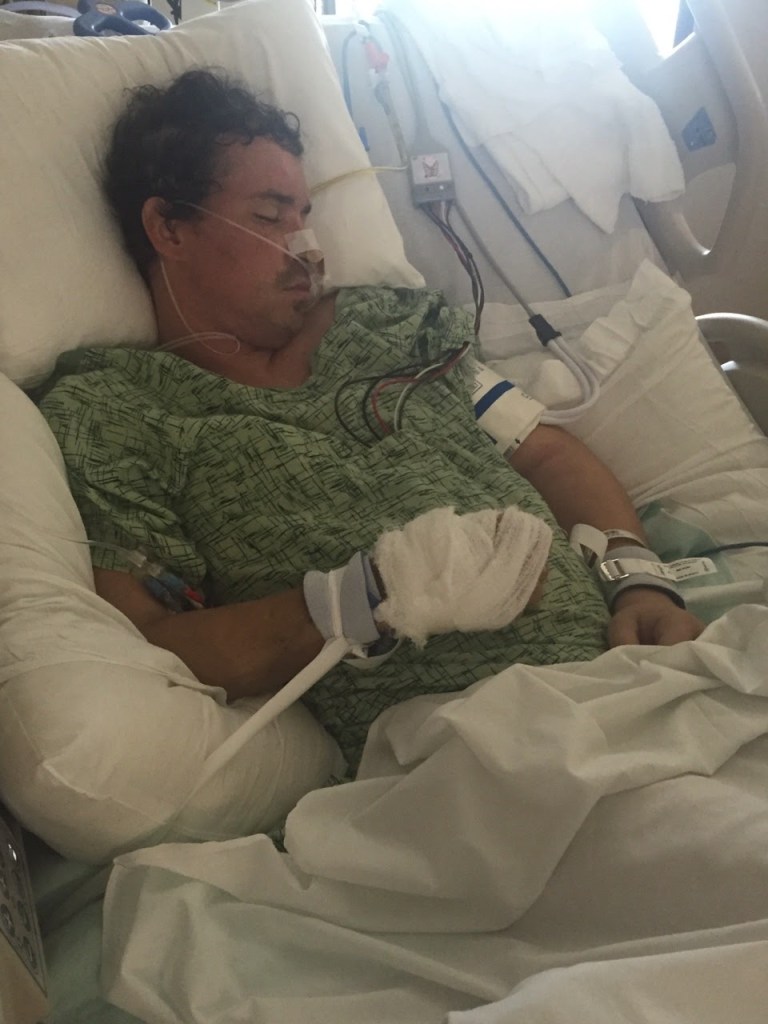
I was a vicious excuse for a man and drowned the pain of committing nearly every deadly sin with bottle after bottle of vodka until, in 2016, my body reached its breaking point. I collapsed and had organ failure and found myself in the ICU. I had alcoholic pancreatitis, anorexia nervosa, hypertension, and a slew of other medical issues. The doctors were not sure I would make it. When I woke from the coma, my estranged wife was there to help me begin to get my life back together. She took me back and provided me with love and comfort while I recovered, but I was angry at being alive. I couldn’t shake the guilt and remorse I felt for where we were as a family. I survived as a dry drunk while I recovered physically but since I had never addressed the root of my addiction, my problems returned and I quickly lost everything again.
My life has been filled with blessings from God and I would be remiss to not mention that He loved me through all of this, and was more than merciful. I married the love of my life. I have beautiful boys. I have worked in jobs that some would deem prestigious. By October of 2020 I would have nothing but a bag of clothes to my name. I was an absent father, homeless, unemployed, divorced, and had barely spoken to most of my family members in years. My father had just passed from alcoholism and I did not attend his funeral out of fear and embarrassment for who I believed I was.
I was hopeless.
But this is not a story about hopelessness. This is a story about redemption. About a God who pursues us even when we’re running. About a friend who believed in me when I couldn’t believe in myself. About a woman who loved me through the unlovable seasons. About three boys who deserved a father and finally got one.
This is the story of how I died and came back to life.
“The Reconciliation” (2016-2017)
By 2016, I had burned almost every bridge in my life. Family, friends, employers—everyone eventually reached their limit with my lies, my stealing, my broken promises. Keith was no exception.
We’d been best friends since childhood, but by my late twenties, I’d done so much damage to that friendship that Keith finally had to walk away. I’d stolen from him. Hooked up with his sister behind his back. Got him in trouble at his job at Wawa when I drunkenly stole from the store. Hit on girls he was seeing. Accused him of things he didn’t do. The list went on and on.
Keith had been the one person who always had my back, and I’d repaid his loyalty by being the worst kind of friend imaginable.
For years, we barely spoke. I’d deleted him from Facebook in some drunken fit of shame and self-sabotage. He’d blocked my family members, wanting nothing to do with the Hamsons and our dysfunction.
But after my collapse in 2016—after the ICU, the organ failure, the near-death experience—something changed. Maybe hitting bottom gave me a moment of clarity. Maybe nearly dying made me realize how many people I’d hurt.
I reached out to Keith. Left him a voicemail. Sent him a message on Facebook after re-adding him.
His response was not what I expected.
Keith’s First Message – The Reckoning
I got your message. What did you want? I can’t imagine you calling just to say hi because I don’t think you would do that. So you must have wanted something—what was it?
I did text you back. And you know I would have preferred to talk to you on Facebook but since you were kind enough to delete me I couldn’t do that. An irony of that is I was the one who got you to go on Facebook in the first place.
All my life I stuck up for you. All my life I helped you. All my life you stole things and lied to me. I was the one person who had your back the whole time and you still managed to do horrible things to me and my friends. You are someone who does not deserve a chance to be friends with someone like me. I gave you so many chances, Mikey. You stole from me and my friends. You hooked up with my sister behind my back. You robbed my place of employment and you are lucky I was as popular as I was and am now because you should have gone to jail that night you were drunk and stole things from the cooler and everywhere else at Wawa.
You hooked up and tried to hook up with the girls I was seeing—even though you could just hook up with any other girl. No, you had to be selfish and try to go after my girls.
You accused me of smoking weed upstairs in your house in the top room and then leaving weed up there and not putting the air conditioner back when it was that one girl from Jefferson who actually did that. But no, you had to accuse me. I still remember when you said it too. We were at some random Surf City beach late at night and we had friends with us and they went up to the beach. You and I stayed behind on the road/deck thing and after everyone walked away you had your arms crossed and looked at me and said, ‘So why’d you do it? Why’d you do it, man?’ You should have fucking known better, Mike. Why would I do something like that when I could have smoked anywhere or at my house? And you know how clean I am—I would have never left a mess like the one she left. Common sense, Mike.
I’m the one person you should have respected and been nice to. And you couldn’t even do that. I can go on if you like—how about the time you stole that girl’s wallet at Danielle’s house? That was nice of you to do. You’re the reason why we can’t have nice things. You’re the one I couldn’t take anywhere without you doing something horrible or shitty to someone.
And besides your family, I am someone that I know you will have no choice but to listen to. You deserve to hear this, and coming from me, it means something. Believe me, I could go on about you, but why waste the time? You deserve far worse than what you got, Mikey. And this is hardly a lecture but you need to hear this in hopes you can change and be a better person. Do I think you will change and be better? NO, of course not. But I can hope for the best with you. I even put off going into the army for you and your wedding, Mike. I had to pull some serious strings for that one. Looking back, I feel like such a fool to have done anything for you. I loved you like a brother, man—you were one of my best friends.
And you know what? This is the part that really matters, this next sentence.
Even though you did all the bullshit listed above and were a horrible person and an even worse friend—I am still here for you. I said I would be and I keep my promises. I know I can still change you and I know I can make you a rich man if I wanted to.
So what did you need, Mikey? I’ll hear you out—I’ll listen to what you need.
My Response – The Moment of Truth
Reading Keith’s message, I felt like I’d been punched in the gut. Every word was true. Every accusation deserved. I’d done all those things and worse, and Keith—the one person who’d loved me unconditionally—had finally reached his limit.
But buried in that brutal honesty was something else: I am still here for you.
Even after everything, Keith was giving me another chance.
I sat at my computer for hours, trying to figure out how to respond. What do you say to someone you’ve hurt that badly? How do you even begin to apologize for a lifetime of betrayal?
Finally, I wrote back. I don’t remember my exact words, but the substance was simple: You’re right about everything. I was a terrible friend. I don’t deserve your forgiveness, but I’m asking for it anyway. I’m trying to get sober. I almost died. I want to be better. I want to be the friend you deserved all along.
I hit send and waited.
Keith’s Reconciliation Message – Grace
His response came a day later:
Mikey, the first thing I will say is that I did not enjoy writing that email to you. But unfortunately, I had to write it like that for you to see where I was coming from.
Listen, we can move on. We can forget about the past and you can show me the new you.
You were my other half at one point—you know that right? You were my guy man and I can’t forget that. I’m not going to sit here and say things to hurt you or get a point across. I feel you get it at this point.
Yes, let’s talk. Let’s catch up. Let’s have a friendship. You always meant a lot to me and you still do. You always will, that’s the truth of the matter. I’m making this easy because we have lost enough time already not being in touch.
Call me or text me on my cell. This is my Facebook account: [link]. Add me. I know I blocked your sis and your family, but I can’t recall if I blocked you. If I did, let me know, and I’ll go unblock you and add you.
You took the time to reach out to me, and I thank you. The sooner we move on in our friendship, the better. I’ll be up for a bit tonight, so email back or text or call or whatever you want to do.
I’ll be a part of your life again. Absolutely. I love you, too, bud, and I look forward to loving you like a brother again.
You were such a special guy, man. You had so much talent, so much charm, charisma, wit, personality, etc. You had all of it. I’d love to catch up and make sure you are the same you I loved like family for a long time in my life.
Get back to me asap and we can begin OK? I’d love to hear your voice. My house line is the same number too. Say hi as soon as it is possible, brother. Until then, take care.
The Call
I called him immediately. My hands shook as I dialed, terrified he wouldn’t answer, terrified he would, terrified of hearing his voice after so many years of silence.
“Mikey?” His voice was exactly as I remembered—warm, genuine, full of life.
“Keith.” My voice broke. “I’m so sorry, man. For everything.”
“I know you are. And I forgive you. Now let’s move forward.”
Just like that. No additional lecture. No conditions. Just forgiveness.
We talked for over two hours on that first call, catching up on years of lost time. Keith told me about his life in Florida, his work, and his family. I told him about my wife, about the boys, about nearly dying, about trying to get sober.
“You can do this,” Keith said with absolute certainty. “You’re going to beat this thing, Mike. I know it. God told me.”
“God told you?” I tried to keep the skepticism out of my voice.
“Yeah. I’ve been praying for you for years, even when we weren’t talking. And lately, I’ve been getting this strong feeling that you’re going to make it. That you’re going to get sober and do something important. Help people. Make a difference.”
Tears streamed down my face. “I want to believe that.”
“Then believe it. I do. And I’m not wrong about this stuff.”
Over the following months, Keith and I talked regularly. He became my anchor, the person who believed in me when I couldn’t believe in myself. Every time I relapsed—and I did, repeatedly—Keith was there with encouragement rather than judgment.
“You’re going to make it,” he’d say. “This isn’t the end of your story. Just keep trying.”
The Final Conversation – Summer 2018
Our last conversation was in July or early August 2018. I was in bad shape again—homeless, drinking heavily, drowning in shame. I’d been avoiding Keith’s calls because I didn’t want him to know how badly I’d relapsed.
But Keith was persistent. He kept calling, kept texting, kept leaving messages: I love you, brother. Call me when you can.
Finally, I answered.
“There you are,” he said, relief flooding his voice. “I’ve been worried about you.”
“I’m not doing good, Keith. I relapsed again. I’m homeless. Everything’s falling apart.”
“I know. But you’re going to be okay. You’re going to get through this.”
“How do you know?”
“Because God told me. I was praying for you the other night and I felt Him say clear as day: ‘Keith, your friend is going to make it. He’s going to get sober, he’s going to find his purpose, he’s going to help a lot of people. Don’t give up on him.'”
I wanted to believe him. Wanted to believe that God cared enough about a broken-down alcoholic to send messages through his friend. But I was too deep in the pit to see any way out.
“Promise me something,” Keith said.
“What?”
“Promise me you won’t give up. Promise me that when you finally surrender—and you will—you’ll remember this conversation. You’ll remember that someone believed in you even when you couldn’t believe in yourself.”
“I promise.”
“I love you, Mikey. You’re going to make it. I know you are.”
“I love you too, Keith.”
Three weeks later, he was dead.
The Aftermath
When I got the news of Keith’s death on August 15, 2018, I was drunk. I immediately drank more, trying to process the impossible information that Keith Pellicoro—36 years old, full of life and faith and love—was gone.
He’d died suddenly from a heart condition no one knew he had. Just collapsed and was gone before anyone could save him.
I didn’t go to the funeral. I was too drunk, too ashamed, too broken to face his mother Anne, his sisters Kathleen and Kimberly. How could I show up and pretend to be a real friend when I’d spent our last years disappointing him over and over?
Instead, I kept his obituary in my wallet. Read it obsessively:
Keith J. Pellicoro. August 15, 2018. Age 36. Survived by his mother Anne, sisters Kathleen and Kimberly, one niece, and three nephews.
And I kept his messages. Reread them when I was drunk and wanted to die. Especially that reconciliation message:
“You were such a special guy, man. You had so much talent, so much charm, charisma, wit, personality, etc. You had all of it.” I believed none of this anymore.
Keith had seen something in me I couldn’t see in myself. Even after I’d betrayed him countless times, even after he’d had every reason to give up on me, he’d welcomed me back. Forgiven me. Believed in me.
I’ll be a part of your life again. Absolutely. I love you too, bud, and I look forward to loving you like a brother again.
And he had been. For those final two years, Keith had been exactly what he’d promised—a friend, a brother, a voice of hope in the darkness.
Now he was gone, and I was still here.
The guilt was suffocating. Keith—good, faithful, loving Keith—was dead at 36. And I—selfish, destructive, alcoholic me—kept waking up each morning.
It felt cosmically wrong.
But Keith’s final words haunted me: Promise me you won’t give up. Promise me that when you finally surrender, you’ll remember this conversation.
I had made that promise to him. And now he was dead, and that promise became sacred in a way no promise to the living could ever be.
For two more years, I would carry Keith’s words with me through homelessness, through my father’s death, through my second stint at Faulkenburg, through the darkest descent of my life.
You’re going to make it. God has plans for you. Don’t give up.
And when my wife called in October 2020 offering me one last chance at Faith Farm, Keith’s voice was the one I heard: When you finally surrender, you’ll remember this conversation.
I remembered.
And I walked through those gates with Keith’s promise in my heart, finally ready to become the man he’d always believed I could be.
Childhood Memory
Long Beach Island in summer was a different world entirely—one where the Phillies’ record didn’t matter and nobody checked their beeper unless they absolutely had to.
The weathered beach houses perched along the narrow streets like aging showgirls who’d seen better decades but still knew how to work their angles. Their cedar shingles had surrendered to the sun years ago, bleached to the color of driftwood and old newspapers, each one curling at the edges like pages in a book left too long in the bath. Paint didn’t so much peel as escape—fleeing in translucent ribbons that caught the light like insect wings, revealing the archaeological layers beneath: optimistic turquoise from the ’80s, butter yellow from some forgotten ’60s summer, and beneath it all, the ghost of original white. The wooden decks had warped into gentle waves themselves, groaning under your weight like they were doing you a personal favor by not collapsing entirely.
Splinters lurked like tiny sentries, waiting for the careless dance of bare feet grown stupid with vacation confidence. Beach tags from ’96, ’98, 2000 still clung to doorframes like the papery husks of cicadas—little badges of honor proving these places had survived another season, back when we thought the Sixers with AI might actually go all the way.
The air was thick enough to swim through, heavy with salt that stuck to everything and that coconut sunscreen smell that meant summer even more than the calendar did. Hawaiian Tropic slathered on with the casual confidence of people who thought SPF 4 was being cautious, mixed with the low-tide funk of the bay, pizza from Nino’s, funnel cake from the boardwalk, and always that clean-dirty ocean smell that got into your clothes and stayed there until September. You could taste it all on your tongue—salt and summer and the promise that today would be exactly like yesterday and tomorrow would be the same, and wasn’t that the whole damn point?
Underneath ran stranger notes: the green smell of bay water where it pooled beneath docks, warm as soup and twice as murky, where we’d catch crabs with raw chicken necks tied to strings like we were filming our own episode of Survivor; the ghost of last night’s bonfire smoke still haunting someone’s sweatshirt; the electrical ozone scent that preceded afternoon thunderstorms that would send everyone scrambling for their beach chairs like it was Black Friday at the Outlets.
The beach stretched forever in both directions, dotted with umbrellas tilting against the wind like drunk Eagles fans after a tough loss. Sand shifted through its moods—platinum near the dunes where beach grass conducted its orchestra in the wind, deepening to honey where feet had packed it hard, then turning dark as tobacco where waves rewrote the shoreline every seven seconds.
Boogie boards stuck in the sand like neon tombstones. Someone’s Nerf football bobbing in the shallows. A sandcastle already melting back into nothing. Beach chairs sinking slowly into the sand like the Eagles’ playoff hopes in late December. The ocean just kept rolling in, patient and relentless as another .500 season, rolling in with the mindless persistence of Sports Radio callers complaining about Andy Reid’s clock management, each wave hissing across the sand before pulling back to try again.
This was where my family came alive each year, like we’d all been holding our breath since last August and could finally exhale. My father’s shoulders dropped somewhere around the causeway bridge. My mother kicked off her shoes before we even unpacked, stopped checking her watch and started checking tide charts.
My siblings and I stopped being too cool for each other and went back to being kids who gave a damn about hermit crabs and who could bodysurf the farthest, dropped our protective sarcasm like a costume that no longer fit. We shed our regular lives like Allen Iverson shaking a defender—all that mainland weight of school and work and worry just falling away, dissolving like salt in water, simply falling away like Ricky Watters on a crossing route when he saw a linebacker coming.
For two weeks, we lived on island time, where the biggest crisis was whether to hit Ron Jon’s or just go straight to Wawa for hoagies, where even the pain of another Phillies loss felt softer through the haze of salt air and low expectations, where we became again the versions of ourselves we’d almost forgotten existed—the ones who laughed easier, argued less, and understood without saying it that this place, this stretch of sand and memory, was the closest thing to sacred we had.
Our shore house sat in the middle of the island, an equal distance from both the bay and the beach. Two doors down lived the Pellicoro family, and it was there that I met Keith.
We were both young—maybe seven or eight years old the first summer I can remember. Keith was one of those kids who could walk into a room full of strangers and leave with five new best friends, who remembered everyones name, whose staccato laugh you could hear from three houses down. We clicked right away over hacky sack circles, basketball games, and riding our BMX bikes to the arcade.
Every summer after that, Keith and I picked up exactly where we’d left off. It didn’t matter that we lived in different towns, went to different schools, led different lives during the other ten months of the year. When summer came and our families returned to Long Beach Island, Keith and I were inseparable.
Our families would spend entire days on the beach—swimming until our skin pruned, playing football in the surf, lying on towels and talking about everything and nothing. As we got older, the conversations deepened. We talked about girls, about family drama, about our dreams for the future.
Keith wanted to help people. Even as a teenager, he had this sense of purpose, this calling toward service. He talked about maybe becoming a police officer or working with kids who needed guidance. He had a natural gift for making people feel seen, valued, and important.
I, on the other hand, was already starting to unravel.
The Diverging Paths
By the time we were fifteen or sixteen, the difference between Keith and I was becoming stark.
Keith was grounded. He had very strong convictions, which was surprising to me since his surrounding family seems off-kilter, to say the least. He radiated an air of confidence, a clear sense of who he was and what he wanted from life. He played by the rules—not because he was afraid of consequences, but because he genuinely believed in doing the right thing.
I was pure chaos. Already drinking heavily, lying to everyone who loved me, barreling down a destructive path that I couldn’t see – but Keith somehow could.
“You okay, man?” he’d ask during those summer visits, his eyes full of concern I didn’t think I deserved. He paced back and forth quite often, almost as if he were purposefully commanding the room. Not a spastic movement, but just enough to where you were forced to keep your eyes and attention on him.
“Yeah, I’m good,” I’d lie, cracking open another beer, lighting another cigarette.
He didn’t push. That wasn’t Keith’s way. He would make leading statements and force an agreement at the end.
“You know that you’re going to call that guy tomorrow, right? It’s going to happen, for sure, right, Mikey?”
He just stayed present, stayed loyal, stayed hopeful that somehow I’d find my way back to a solid mindset of positivity.
Even as my addiction progressed—through high school, through college attempts, through my first arrests—Keith remained constant. Our summer reunions became less frequent as adult responsibilities took over, but we stayed in touch. Phone calls. Text messages. Facebook updates. Even after everything, he’d believed I was still that person underneath all the addiction and destruction.
“Get back to me asap and we can begin OK? I’d love to hear your voice.”
I could still hear his voice. That last phone call in the summer of 2018, weeks before he died. His absolute certainty: You’re going to make it. God has plans for you. Don’t give up.
“What are you reading?” My wife’s voice was soft, careful.
“Keith’s messages. From when we reconnected.”
She nodded, her hands tight on the steering wheel. She’d known Keith, too, back when we were all young and the future seemed full of possibilities. She’d been there when Keith delayed going into the army to be at our wedding.
“He believed in you,” she said quietly.
“I know.”
“Even when no one else could.”
“I know.”
“So don’t let him down. Not this time.”
The Promise
I scrolled to the texts from our final conversation. I’d read them so many times I’d memorized every word, but I needed to see them again. Physical proof that Keith had spoken this over me.
You’re going to make it, Mike. I know it. God told me.
Promise me you won’t give up. Promise me that when you finally surrender—and you will—you’ll remember this conversation. You’ll remember that someone believed in you even when you couldn’t believe in yourself.
I love you, Mikey. You’re going to make it. I know you are.
I’d made that promise to him. August 2018. Three weeks before his will gave out, and he was gone at 36 years old. His obituary says it was a heart issue, but I know the true cause of his passing. If I can ever muster up the courage to write a book, I will dedicate a long chapter to that period of our lives.
For two and a half years, I’d broken that promise daily. Drank myself deeper into oblivion. Lived on the streets. Accumulated more arrests. Watched my father die and didn’t attend his funeral. Became exactly what I’d always feared: a man incapable of keeping his word. Unless it was a promise to drink today.
But Keith’s voice wouldn’t let me go. His faith wouldn’t release me. His prophecy—God has plans for you—haunted me in a way nothing else could.
And now, impossibly, I was here. Still alive when I should have been dead. Still being given another chance I didn’t deserve.
“You okay?” My wife glanced at me.
I looked at her—this woman who had every reason to hate me, who I’d betrayed and disappointed more times than I could count, who was somehow still here, driving me to my last chance at redemption.
“I don’t know if I can do this,” I admitted.
“You don’t have to know. You just have to show up.”
She was right. Keith had known. Somehow, impossibly, he’d known I would eventually surrender. That I would finally let God in. That I would remember his words and let them pull me back from the edge.
I put my phone away, Keith’s words burned into my heart.
You were such a special guy man. You had so much talent, so much charm, charisma, wit, personality, etc. You had all of it.
I was going to find that person again. The one Keith had believed in. The one God had plans for.
I had already died. I might as well die trying to break the cycle of addiction in our family.
Arrival
The GPS announced our arrival, and we turned into the entrance of Faith Farm Ministries. I saw the sign first—weathered but welcoming—and then the gates, the buildings beyond, the citrus groves stretching into the distance.
It looked like a thrift store with a church and farm attached. Not a rehab facility. Not a prison. Just an opportunity.
Something inside me cracked open.
For years, I’d associated recovery with punishment. With cold institutional walls and judgmental staff, and the constant threat of failure. Every rehab I’d been to felt like a jail sentence—a place I had to endure until I could get back to my real life of drinking.
But this place looked different. It looked like… sanctuary.
She pulled into the parking lot and put the car in park. Neither of us moved.
“This is it,” she finally said.
I nodded, unable to speak.
“I’m not going to make you any speeches. I’m not going to tell you this is your last chance or that you have to do this for me or the boys. You know all that already.”
“Yeah.”
“I’m just going to say this: I love you. I’ve always loved you. And I’m praying that this time, you finally love yourself enough to get well.”
Tears burned my eyes. “Keith loved me, too. Even after everything.”
“I know.”
“He said I would make it. That God had plans for me.”
“Then prove him right.”
I reached for my phone one more time, opened Keith’s message, and reread the harsh words that had kept me alive and centered me for two and a half years:
I’ll be a part of your life again. Absolutely. I love you too, bud, and I look forward to loving you like a brother again.
Keith couldn’t be part of my life anymore. Not physically. But his faith could be. His belief could be. His prophecy could become my reality.
You were such a special guy, man. You had so much talent, so much charm, charisma, wit, personality, etc. You had all of it.
I was going to find “all of it” again. Whatever Keith had seen in me that I couldn’t see in myself—I was going to find it.
I grabbed my single bag from the back seat and stepped out into the sickly, humid October air.
Walking Through the Gates
We stepped into Paul’s office—a delicate man in his fifties with kind eyes and a limp-wristed handshake.
“Michael Hamson?” he asked.
“Yeah. Mike.”
“Welcome to Faith Farm, Mike. I’m Paul, the intake coordinator. We’ve been expecting you.”
He shook my wife’s hand, thanked her for bringing me, and gave her a moment to say goodbye.
There is a beautiful story to be told about this moment Again, if I ever muster up the courage to write a book, I will be sure to elaborate on this moment.
She hugged me tightly. “Remember what Keith said. You’re going to make it.”
I nodded against her shoulder. “I promise.”
Then she was gone, and it was just me and Pastor Roberts and my bag of clothes and the weight of Keith’s promise.
“I cannot call to check on you, so please write to me. To us. I’m proud of you for being here.”
“You ready?” he asked gently.
“No,” I admitted. “But I promised someone I would do this. Someone who’s not here anymore.”
Pastor Roberts studied my face. “Tell me about them.”
“His name was Keith. He was my best friend. I was a terrible friend to him—stole from him, lied to him, hurt him in every way possible. But he forgave me anyway. Told me I was going to make it. That God had plans for me. Made me promise I wouldn’t give up.”
“When was this?”
“Two and a half years ago. Three weeks later, he died. Heart attack. He was 36.”
Pastor Roberts was quiet for a moment. “And you’re here because of that promise.”
“Yeah.”
“Then let’s honor it. Come on. Let me show you where you’ll be living.”
First Impressions
As we walked through the grounds, I felt Keith’s presence like a weight on my shoulders. Not oppressive—protective. Like he was walking beside me, finally seeing me do what he’d always believed I would do.
Pastor Roberts explained the program structure. One-year residential. Work in the citrus groves and thrift stores. Daily chapel, Bible studies, life skills classes. Intensive addiction counseling and trauma work.
“This isn’t easy,” he said frankly. “A lot of men come here thinking they’re ready and then realize how hard the work is. We have a high dropout rate in the first month.”
“I’m not leaving,” I said with more certainty than I felt.
“What makes you so sure?”
“Because I made a promise to a dead man. And I’m tired of breaking promises.”
Pastor Roberts smiled. “That’s a good reason. Hold onto it when things get hard.”
He showed me to my dorm—a simple room with bunk beds, shared with three other men. My bunk was bottom, far corner. I set my bag on the thin mattress.
This was home now. This bare room with peeling paint and industrial cleaner smell. This was where I would rebuild my life, where I would become the man Keith had believed I could be.
My new roommates introduced themselves. John Wilky, about my age, kind eyes. Carlos, younger, fidgety, clearly withdrawing. Jerome, quiet, reading a Bible.
“Welcome,” John said. “Fair warning—Carlos snores and I talk in my sleep. Jerome’s the only normal one.”
Jerome looked up. “Don’t believe him. I sing hymns at 5 a.m.”
Despite everything, I laughed. The sound felt foreign.
“I can work with that,” I said.
First Night
That night, I couldn’t sleep. Withdrawal, racing thoughts, the weight of where I was and what I was trying to do.
I pulled out the journal they’d given me during intake. A composition notebook with my name in Sharpie: MICHAEL HAMSON JR.
I stared at the blank page, then wrote:
Day 1. January 2021. I’m at Faith Farm. I don’t know if I can do this, but I promised Keith I would try.
Keith—if you can somehow see this—I’m here. I’m finally here. You were right about me needing to surrender. You were right that I would eventually let God in. I just wish you were here to see it.
You said I had all of it—talent, charm, personality. I don’t feel like I have any of that anymore. But you believed it was still there, buried under all the addiction and shame. So I’m going to trust you. I’m going to dig until I find that person again.
You forgave me after I stole from you, lied to you, betrayed you. You welcomed me back and loved me like a brother. That’s grace I don’t deserve but desperately need to learn to accept.
I’m keeping my promise. I won’t give up. God has plans for me—you said so. I’m going to find out what those plans are.
I miss you, brother. I love you. And I’m going to make you proud.
I set down the pen, my hand steadier than it had been in years.
From the bunk above, John Wilky spoke softly. “First night’s always the hardest.”
“Yeah.”
“Gets easier. Not right away, but eventually. You’ll make it.”
Third time someone had said that to me. Keith. Monique. Now John.
Maybe, eventually, I’d start to believe it.
I closed my eyes and said a prayer:
God, Keith said you had plans for me. I don’t know what they are, but I’m finally ready to find out. Please help me keep this promise. Please help me become the man Keith believed I could be. The man he saw when he wrote “You had all of it.”
I can’t do this alone. I’ve tried. I’ve failed every time. But maybe with You, I can finally make it.
For Keith. For Monique. For my boys. For the man I was supposed to be all along.
Amen.
I opened my eyes, still at Faith Farm, still alive, still holding onto Keith’s promise.
Tomorrow would bring work and chapel and withdrawal and the long road ahead.
But tonight, I’d kept my word.
I’d shown up.
And somehow, that felt like enough.
First Week
The first six days at Faith Farm were brutal.
My body was in full revolt—sweating through my clothes, hands shaking so badly I could barely hold a rake, stomach rejecting most food, sleep coming in fitful two-hour bursts punctuated by nightmares. Withdrawal from decades of alcohol abuse doesn’t happen quietly or quickly. It’s a violent expulsion, the body screaming as it tries to remember how to function without poison.
But I stayed. Every morning when I wanted to leave, I thought about Keith’s message: I’ll be a part of your life again. Absolutely. And I stayed.
Every afternoon when the cravings became unbearable, I remembered his words: You were such a special guy man. You had so much talent. And I kept working.
Every night when guilt and shame threatened to suffocate me, I heard his voice: You’re going to make it. God has plans for you. And I wrote in my journal.
Day 2: Still shaking. Everything hurts. But I’m still here.
Day 3: Worked in the grove today. Wanted to quit after an hour. Didn’t. Keith would be proud.
Day 4: Read Psalm 51. “Create in me a clean heart, O God.” I want that. I really want that.
Day 5: Called my wife. Told her I’m staying. She cried. Good tears, I think.
Day 6: Haven’t thought about drinking in 24 hours. That’s something.
The physical work was grounding. Raking leaves, pulling weeds, maintaining the grounds—simple tasks that required nothing but presence. For a man who’d lived entirely in his head for years, drowning in thoughts and regrets, the clarity of physical labor was medicinal.
Chapel services became my anchor. Twice daily—morning and evening—we gathered in that simple room with the wooden cross. Pastor Roberts would read Scripture, and I’d listen with an attention I’d never given anything before. These weren’t just stories. They were lifelines.
But I was still smoking. Had been since I was a teenager. Cigarettes were the one vice I’d allowed myself to keep, the one thing I told myself was fine because at least it wasn’t alcohol. Every morning at 5:30 a.m., before chapel, I’d join the other men at the smoke pit—a covered area with benches and ashtrays, the air thick with tobacco and the coughs of recovering addicts.
It was routine. Expected. Permissible.
Until January 7th.
The Morning
I woke at 5:15, as I had every morning since arriving. My body’s internal clock had adjusted to the Faith Farm schedule—early to bed, early to rise, the rhythm of men trying to rebuild their lives.
Jerome was already awake, reading his Bible by the dim light of his bunk lamp. Carlos snored. John muttered something in his sleep about fishing.
I swung my legs out of bed and reached for my cigarettes on the shelf—a ritual so ingrained I didn’t even think about it. Light jacket. Flip-flops. Pack of Marlboros. Lighter.
I was halfway to the door when I heard it.
Not an audible voice, exactly. Nothing that would show up on a recording. But unmistakable nonetheless—clear and gentle and absolutely certain:
Don’t smoke.
I froze, hand on the doorknob.
The words seemed to come from everywhere and nowhere at once. Inside my head but not from my own thoughts. Outside myself but intimately personal.
Don’t smoke.
My heart started racing. This wasn’t withdrawal. Wasn’t my imagination. Wasn’t my conscience or wishful thinking.
This was God.
I’d been praying for six days, begging God to help me, to show me He was real, to give me some sign that I wasn’t doing this alone. And now, in the predawn darkness of a dorm room in a recovery facility, He’d spoken.
Two words. Simple and direct.
Don’t smoke.
The Choice
I stood at that door for what felt like an eternity, cigarettes in hand, lighter in my pocket. Every cell in my body screamed for nicotine. I’d been smoking for over twenty years. It was the first thing I did every morning, the last thing before bed, my constant companion through stress and boredom and withdrawal.
But God had spoken.
And I could choose to obey, or I could choose to ignore Him.
Keith’s words echoed in my mind: Promise me that when you finally surrender—and you will—you’ll remember this conversation.
This was surrender. This moment. Right here.
Not just surrendering alcohol or drugs or the big, obvious addictions. But surrendering everything. Every crutch. Every coping mechanism. Every false comfort I’d used to avoid feeling what I needed to feel.
Don’t smoke.
I put the cigarettes back on the shelf.
My hands were shaking worse than they had all week, but not from withdrawal. From fear. From the terrifying recognition that if I walked past that smoke pit, everything would change. There would be no going back to the comfortable patterns, the manageable recovery where I got to keep some pieces of my old life.
This was total surrender.
I took a breath and walked out the door.
The smoke pit was between my dorm and the chapel. I’d have to walk right past it—past the men already gathering, lighting up, starting their day the way addicts start every day: with a chemical hit to make reality more bearable.
I could see them as I approached. Recognized several faces. John Wilky was there, exhaling smoke into the humid morning air. He raised his hand in greeting.
I raised mine back but kept walking.
Don’t smoke.
One foot in front of the other. Past the benches. Past the ashtrays. Past the familiar smell of tobacco that had been my constant companion for twenty years.
And then I was through. On the other side. Still walking toward the chapel.
That’s when it hit me.
A wave of peace so profound, so complete, that I actually stopped walking. Just stood there in the middle of the path, tears streaming down my face, my whole body flooded with something I’d never felt before.
Joy. Pure, unspeakable joy.
Not happiness—happiness is circumstantial, dependent on external factors. This was joy from a source beyond myself, joy that had nothing to do with my circumstances and everything to do with obedience. With saying yes to God when every part of me wanted to say no.
The heaviness I’d carried for six days—for forty years—lifted. Not completely. Not permanently. But enough that I could breathe differently. Enough that I could see what was possible when I stopped rebelling against the One who created me.
I stood there crying on the path to chapel, and for the first time since Keith’s death, I felt his presence not as grief but as celebration.
See? I could almost hear him saying. I told you. God has plans for you. And this is just the beginning.
Chapel – Morning Service
I walked into chapel still crying, still feeling that inexplicable peace radiating through every part of me. Pastor Roberts was already at the podium, preparing for the service.
He looked up and saw my face—saw something that made him pause.
“You okay, Mike?”
“Yeah,” I managed. “Better than okay. God just… He spoke to me.”
Pastor Roberts smiled. “What did He say?”
“He told me not to smoke. And I didn’t. And I—” My voice broke. “I’ve never felt anything like this before.”
“That’s the Holy Spirit, brother. That’s what obedience feels like. That’s what happens when you say yes to God instead of yes to yourself.”
Other men were filing in now, taking their seats. Several looked at me curiously—the new guy crying before 6 a.m. chapel.
I took my usual seat in the back, still trembling. Jerome sat beside me and quietly handed me his Bible, open to a passage he’d marked.
Isaiah 43:18-19: “Forget the former things; do not dwell on the past. See, I am doing a new thing! Now it springs up; do you not perceive it? I am making a way in the wilderness and streams in the wasteland.”
I read it through blurred vision. God was doing a new thing. Making a way where there had been no way. Creating streams in the wasteland of my life.
And it had started with two words: Don’t smoke.
The Day – Transformation
I didn’t smoke that day. Or the next day. Or the day after that. Or since.
The cravings were intense—twenty years of addiction doesn’t disappear because God speaks once. But every time I wanted to light up, I remembered that moment. That voice. That peace.
And I chose obedience.
By the end of the week, John Wilky pulled me aside. “What happened to you, man? You’re different.”
“God told me not to smoke.”
“And you just… stopped? Just like that?”
“Yeah.”
He shook his head in amazement. “I’ve been trying to quit for three years. Can’t make it past a few days.”
“It’s not me, John. I couldn’t do it on my own. But when God speaks, He gives you the strength to obey.”
“Maybe He’ll speak to me too,” John said quietly.
“Maybe He already has. Maybe you just need to listen.”
That night, I wrote in my journal:
Day 7. January 7, 2021. Today God spoke to me – and I listened – for the first time in my life.
I was about to go smoke, same as every morning, when I heard His voice: “Don’t smoke.” Clear as day. Unmistakable.
I put the cigarettes down and walked past the smoke pit. And the moment I did, I felt this incredible peace wash over me. Joy. Real joy. Not happiness that depends on circumstances, but deep, unshakeable joy that comes from saying yes to God.
I haven’t smoked all day. Twenty years of addiction, and God broke it with two words.
Keith was right. God has plans for me. And I’m finally ready to find out what they are.
I’m beginning to see what’s possible when I stop rebelling. When I surrender completely—not just the alcohol, but everything. Every crutch. Every false comfort. Every way I’ve tried to manage my life on my own.
Pastor Roberts says this is just the beginning. That when you say yes to God in one area, He asks you to say yes in other areas too. That transformation is a process, not an event.
I’m ready. For the first time in my life, I’m actually ready.
Thank you, God, for not giving up on me. Thank you for Keith, who believed in me when I couldn’t believe in myself.


 Mike Hamson