


The First Sip
The house was silent in that particular way it only gets after a party—not peaceful, but exhausted. Suspended. Like the building itself needed to sleep off whatever had happened the night before.
Mike woke at 5:47 AM, same as every morning. Eight years old and his body was a clock that didn’t care about late nights or celebrations or his sister’s high school graduation. The sun wasn’t up yet, but the birds were starting, and that was enough.
He moved through the dark hallway in his pajamas, bare feet on carpet, then hardwood, then the cool tile of the kitchen. The newspaper would be on the front step, rubber-banded and damp with dew. This was his routine, his territory—the quiet morning hours before the house woke up and filled with noise and demands and the chaos of other people.
But this morning, something was different.
The garage door was open a crack. Not much. Just enough that Mike noticed.
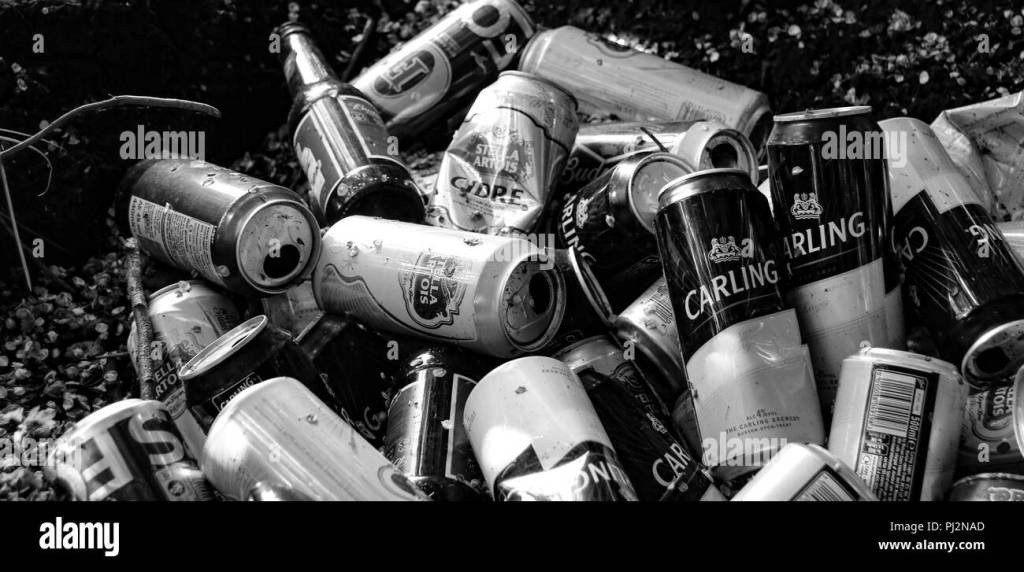
He pushed through it, and the smell hit him first—stale and sour, like the inside of a forgotten lunch box. The overhead fluorescent flickered on with a mechanical hum, and there it was: a metal trash can, the kind with the dented sides, filled nearly to the brim with aluminum cans. Budweiser. Miller Lite. Coors. The water at the bottom was still cold when he touched the can’s rim, but the ice had melted hours ago, leaving only the metallic tang of dissolved metal and backwash.
Mike stared at the trash can. He could hear his own breathing.
He shouldn’t. He knew he shouldn’t. Eight years old was old enough to know right from wrong, old enough to understand that this was something adults did and children didn’t. Old enough to know his father would—
But something else was louder than that knowledge. Something that felt like curiosity but tasted like defiance. Something that whispered that if they could leave it here, unguarded, half-melted in a garbage can like trash, then maybe it wasn’t so precious after all.
His hand reached in before he’d decided to reach. The can was wet and cold. Budweiser. He looked at the red label, the way the condensation had made it start to peel at the corners.
The basement door was right there. Three steps and he was through it, down into the cool darkness where the finished wood paneling swallowed sound. This was safe. This was private. This was his.
Mike held the can with both hands, the way you’d hold something breakable. He found the little tab and pulled it, and the crack and hiss seemed deafening in the silence. He froze, listening for movement upstairs.
Nothing.
He brought the can to his lips. The smell was sharper now, yeasty and wrong. His stomach turned preemptively, his body already trying to reject what hadn’t entered it yet.
The first sip was bitter. Worse than bitter—it was aggressively unpleasant, like licking a battery, like drinking liquid disappointment. His face twisted involuntarily, and he had to fight the urge to spit it back out onto the concrete floor.
But he didn’t stop.
He drank it faster then, tilting the can back, letting the cold liquid pour down his throat before his taste buds could protest, before his mind could intervene, before the voice that sounded like his mother or his teacher or God could tell him to stop.
It didn’t taste better as he drank. It tasted worse. But that didn’t matter.
Then it happened.
A warmth bloomed in his chest, spreading outward like spilled water soaking into fabric. His shoulders loosened. The basement felt different—softer somehow, the sharp edges of his thoughts going fuzzy and pleasant. The constant hum of anxiety that he didn’t even know he carried, the eight-year-old worry about disappointing people and doing things right and being good enough—it dimmed. Not gone, but turned down like a volume knob.
He felt taller. Braver. Like he could say anything, do anything, be anything.
The beer was half-gone now and his face felt warm, his fingers tingled. He looked at the can in his hands with something like wonder. This. This was what they’d all been chasing yesterday at the party. This floating, fearless feeling. This sense that the world couldn’t touch him, that nothing bad could happen, that he was invincible and light and free.
For the first time in his short life, Mike felt confident.
Not strong like his father. Not pretty like his sisters. Not smart like the kids at school. But confident in a way that came from inside, that made the scared parts of him go quiet, that made him feel funnier, quicker, better than he’d ever been without it.
He didn’t know he was chasing relief. Didn’t know that what he felt wasn’t confidence but its chemical counterfeit. Didn’t know that real confidence doesn’t come in aluminum cans, doesn’t taste like batteries and broken promises, doesn’t require you to poison yourself to feel funny.
All he knew was that he’d found something.
And he never wanted to let it go.
What he didn’t know—couldn’t know, at eight years old in a basement with a stolen beer going warm in his hands—was that he’d just made a covenant with something patient and hungry. Something that would wait for him. That would become his comfort and his destroyer, his escape and his cage, his best friend and his worst enemy.
The demon didn’t arrive with fangs or flames. It arrived in an aluminum can on a Sunday morning, wearing the face of rebellion and tasting like batteries and promises.
It whispered: This will make you brave.
It whispered: This will make you free.
It whispered: This will make you feel.
And Mike, eight years old and alone in a basement, believed every word.
He couldn’t see the chains yet. They were still too small, too light, too easy to carry. They wouldn’t get heavy for years. By then, he’d forget he was ever without them.
The can was half-empty when he heard the footsteps upstairs.
His father was awake.
Mike’s heart hammered against his ribs. He looked at the can in his hands, then at the stairs, calculating. He could hide it. Shove it behind the water heater, stash it in the corner where the Christmas decorations lived in boxes. But his hands wouldn’t move fast enough. His brain felt slow, cotton-stuffed.
The basement door opened.
But it wasn’t his father on the stairs. It was Amanda.
His sister descended slowly, each step deliberate. Twelve years old and already carrying herself like someone who’d been put in charge of things she didn’t ask for. Her hair was still messy from sleep, her graduation day makeup smudged under her eyes like she’d cried it off or just forgotten to wash her face.
She stopped three steps from the bottom. Her eyes found the can in his hands.
“Mike.” Not a question. Just his name, heavy with something he couldn’t identify.
He tried to hide it behind his back, a stupid, obvious motion that fooled no one.
“Let me see it.”
He brought the can back around. Held it out like evidence. Like proof of something.
Amanda came down the last three steps. She didn’t grab the can from him. She just stood there, close enough that he could smell her—cigarettes and hairspray and the vanilla body spray she wore too much of. She leaned in. Sniffed.
Her face changed. Something behind her eyes crumpled.
“You drank it.” Still not a question.
“There were so many,” Mike heard himself say. “In the garage. I just—”
“You’re eight.”
“So? Everyone was drinking yesterday. You were. Dad was. Everyone was laughing and having fun and—”
“That’s different.”
“Why?” The word came out louder than he meant it to. Defiant. “Why is it different? Because you’re older? Because you had your stupid graduation party? Everyone gets to have fun except me?”
Amanda’s jaw tightened. She looked like she was trying to solve a math problem that had no right answer.
“That’s not—” She stopped. Started again. “Mike, you can’t. You’re a kid. This stuff, it’s not for kids.”
“Then why’d they leave it there?” His voice cracked on the last word, embarrassing him. “If it’s so bad, why’s it just sitting in the garage where anyone can get it?”
“Because they trust you not to.”
The words hit him like a slap. Trust. The way she said it—past tense, already broken.
Amanda reached out and took the can from his hands. Not rough. Gentle, actually, which somehow made it worse. She looked at it, then at him, and her face did something he’d never seen before. She looked disappointed. Not angry like Mom got, not scary like Dad got. Just… sad.
“I’m not telling,” she said quietly.
Relief flooded through him so fast it made him dizzy.
“But you need to brush your teeth. Like, three times. And eat something. Bread, maybe. Something that’ll—” She paused. “Just make the smell go away.”
Mike nodded, eager to agree, to do whatever would make this conversation end.
“And Mike?” Amanda set the can down on the concrete floor. “Don’t do this again. Please.”
The please surprised him. Adults didn’t say please. They said because I said so and wait until your father gets home and what were you thinking. They didn’t say please like they were asking a favor, like he had the power to hurt them.
He wanted to ask her why she looked so scared. Why her eyes were getting wet. Why drinking a stupid beer that tasted like metal and regret was making his sister look at him like he’d done something unfixable.
But he didn’t ask. He just nodded again and ran upstairs, taking the steps two at a time, his stomach sloshing with Budweiser and shame.
Behind him, Amanda picked up the can. She carried it back to the garage and buried it deep in the trash, under paper plates and plastic cups, where no one would count. Where no one would notice one more can among dozens.
She was twelve years old and already learning how to hide evidence. Already learning that love sometimes meant lying. Already knowing, with a certainty that made her chest ache, that this wasn’t the last time she’d have to protect her little brother from himself.
Or from their father.
That night came too fast.
Mike and Amanda had been put to bed hours ago—8:30, lights out, no exceptions. But graduation weekend had left the house chaotic, the rules loosened just enough that they’d thought maybe, just this once, they could whisper in the dark. Talk about nothing. Be kids staying up past bedtime.
They were wrong.
Mike heard the footsteps first. Heavy. Purposeful. Coming down the hallway with the inevitability of a freight train. His stomach dropped. He knew those footsteps. Everyone in the house knew those footsteps.
The door flew open. Light from the hallway cut across the room like a blade.
“I told you to go to sleep.”
His father’s voice carried no heat, no anger. Just cold statement of fact. Somehow that was worse.
“We were just—”
“Get up.”
Mike’s legs moved before his brain caught up. Amanda was already standing on the other side of the room, her face white in the harsh light.
“Both of you. Now.”
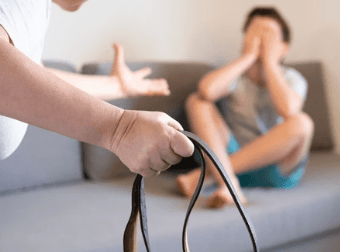
The belt came off in one smooth motion. Mike watched his father’s hands work the leather through the loops—practiced, efficient, like he’d done this a thousand times before. Maybe he had.
“Turn around.”
Mike turned. He heard Amanda crying already, quiet little gasps she tried to swallow.
The first strike hit his thigh like lightning. The crack of leather on skin, then the burn spreading outward in waves. Mike’s eyes watered instantly but he bit down on his lip, tasted copper.
“I said lights out at 8:30.”
Another crack. Another bloom of fire across his leg.
“Do I need to repeat myself in this house?”
Crack.
Something in Mike’s brain went sideways. Survival mode. Problem-solving mode. His eyes darted around the dark room and landed on his pillow.
The next time his father wound up, Mike grabbed the pillow and shoved it against his leg under the covers, positioning it where the belt would land. He let out a cry—maybe a little too theatrical, but in the dark and the chaos, who could tell?
Crack. The belt hit the pillow. Mike yelped again.
Crack. Pillow again. Mike whimpered.
He was clever. He was so clever. He’d outsmarted the belt, outsmarted his father, found the loophole in his own punishment.
Crack. Crack. Crack.
Mike kept up the performance, each fake cry a little victory. His father couldn’t tell. It was working.
Finally, it stopped. His father’s breathing was heavy in the silence.
“Go to sleep. And I better not hear another sound out of either of you.”
The door slammed. The footsteps receded down the hallway. Mike waited until he heard the living room TV click on before he moved the pillow.
His leg throbbed where the first few strikes had landed—the real ones, before he’d thought of the pillow trick. He pulled up his pajama pants in the dim light and saw it: a welt across his thigh, thick as his thumb, already turning purple at the edges.
But he’d won. He’d beat the system. He’d taken control of something that had felt uncontrollable.
He lay back down, the pillow now under his head where it belonged, and felt something swell in his chest. Pride, maybe. Or satisfaction. The same feeling he’d had that morning in the basement with the beer can in his hands.
The feeling of getting away with something.
What Mike didn’t understand—couldn’t understand at eight years old—was that he wasn’t getting away with anything. He was learning. Learning that authority was something to outsmart rather than respect. Learning that pain could be avoided through deception. Learning that the appearance of submission mattered more than actual obedience.
Learning that he was on his own.
The demon that had arrived that morning in an aluminum can smiled in the darkness. It had found fertile ground. A child who already knew how to hide. How to lie. How to protect himself because no one else would.
A child who’d heard his father say “it’s just a beer” a hundred times—to his mother when she worried, to himself when he reached for another, to anyone who questioned. Just a beer. Just a couple of beers. Nothing to worry about.
The same words Mike would use someday. The same justification. The same lie wrapped in casual dismissal.
It’s just a beer.
The demon could work with that. It could work with that for 35 years.


 Mike Hamson