

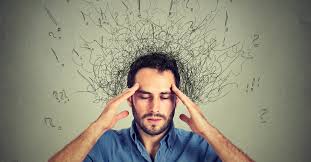
By twenty-three, I had become a collection of contradictions.
I could walk into a room and own it completely while privately planning my disappearance.
I could charm customers, close deals, make people laugh so hard they cried, then drive home convinced everyone secretly hated me.
I could spend entire nights talking at impossible speeds about business ideas, God, music, psychology, money, futures so vivid they felt prewritten—and then spend three days afterward unable to answer a single text message.
Nobody called it bipolar.
Back then people called me intense.
Or passionate.
Or emotional.
Or driven.
Or crazy.
Or an asshole.
Mostly they called me talented, which turned out to be one of the most dangerous words anyone ever used on me because talent became camouflage. If you can perform well enough publicly, people assume your suffering is manageable privately.
They think functioning means healthy.
It doesn’t.
Functioning just means the engine hasn’t exploded yet.
Mine was already smoking.
Florida was supposed to fix everything.
That’s the lie broken families always tell themselves when they relocate:
new state, new schools, new jobs, new weather, new us.
But geography cannot heal what psychology refuses to confront.
My father still drank.
I still drank.
The rage still moved through the house like electrical current hidden behind drywall.
Only now there were palm trees outside instead of snow.
At first I loved Florida because Florida rewards mania.
Nobody tells you this about manic personalities: in American culture, especially sales culture, hypomania often looks like ambition.
Rapid speech becomes charisma.
Grandiosity becomes confidence.
Impulsivity becomes entrepreneurship.
Obsessive energy becomes “hustle.”
And I was good at it.
At LA Fitness I could sell memberships to almost anyone. I understood people instinctively—their insecurities, aspirations, loneliness, vanity. I could become whatever version of myself the conversation required.
That ability made me money.
It also destroyed my identity.
Because after enough years of shapeshifting, you no longer know which version is real.
I started living in extremes.
Extreme confidence.
Extreme collapse.
Extreme productivity.
Extreme intoxication.
Extreme self-hatred.
There was no middle setting in me. There never had been.
The antidepressants came after one of the crashes.
I don’t even remember which crash anymore because eventually all the collapses blurred together into the same exhausted movie:
can’t sleep,
can’t stop thinking,
drink more,
say reckless things,
make impossible plans,
terrify people,
implode,
disappear,
repeat.
A doctor listened to me talk for maybe forty minutes before deciding my brain required pharmaceutical intervention.
I remember staring at the sample boxes on his desk while he explained serotonin like he was discussing oil changes.
Chemical imbalance.
Mood stabilization.
Side effects.
Adjustment period.
Clinical words.
Clean words.
Nothing about the way depression actually felt.
Nothing about waking up already defeated.
Nothing about the sensation that my soul had somehow developed gravity.
Nothing about lying in bed feeling pinned beneath invisible concrete.
Nothing about the frightening reality that I no longer trusted my own thoughts.
The pills looked too small to fight something that large.
Still, I took them.
Because by then I would have swallowed almost anything if someone promised it could quiet my mind.
The first weeks felt artificial.
Not better.
Artificial.
Like someone had lowered thick glass between me and the world.
The highs dulled first.
That part terrified me.
Because I secretly loved the highs.
Not the destruction afterward.
Not the humiliation.
Not the terror.
But the ascent itself?
God, yes.
Mania felt like finally accessing the version of myself I had always suspected existed underneath the fear.
During those periods I became magnetic.
Women noticed me more.
Conversations flowed effortlessly.
Ideas multiplied faster than I could write them down.
I needed almost no sleep.
Music sounded engineered specifically for my bloodstream.
I felt chosen.
Important.
Destined.
The world sparkled with hidden meaning.
I could drive through Tampa at two in the morning blasting worship music or hip-hop or Coldplay or whatever matched the emotional weather inside me and feel absolutely certain my life was building toward something enormous.
Every billboard became symbolic.
Every coincidence became prophetic.
Every attraction felt cosmic.
I mistook emotional intensity for truth.
That’s what mania does:
it removes skepticism.
Everything feels meaningful because your brain has lost the ability to filter significance appropriately.
A stranger smiling at you in Walgreens becomes destiny.
A business idea becomes a million-dollar certainty.
A spiritual feeling becomes divine appointment.
The problem is that eventually the mind burns through its own fuel supply.
Always.
The crashes came like elevator failures.
Sudden.
Violent.
Humiliating.
One week I would feel unstoppable.
The next week brushing my teeth required negotiation.
People who have never experienced depressive collapse imagine sadness.
Sadness is still active.
Sadness still contains movement.
This was absence.
I would stare at walls for hours because initiating action felt neurologically impossible. Hunger disappeared. Desire disappeared. Entire afternoons vanished into static. Friends would call and I’d watch the phone vibrate without possessing enough emotional energy to answer.
Not because I didn’t care.
Because caring itself had become exhausting.
The SSRIs flattened certain edges, but they also introduced a new fear:
What if the illness and the personality were intertwined?
That question haunted me.
Because if medication removed the intensity—
the charisma,
the obsession,
the emotional electricity,
the speed—
then what remained?
Who was I without the storms?
I had spent so many years building my identity around volatility that stability felt suspicious. Even boredom frightened me. Peace felt unnatural, like wearing someone else’s skin.
Part of me wanted healing.
Another part mourned the loss of chaos before it had even disappeared.
That is the terrible seduction of unstable minds:
the illness convinces you it is also your gift.
And sometimes it is.
That’s the uncomfortable truth nobody likes discussing publicly.
The same machinery that made me destructive also made me compelling.
It fueled the writing.
The sales ability.
The intensity.
The humor.
The emotional perception.
The obsession that let me outwork calmer people.
When the highs came, life stopped feeling ordinary.
Ordinary life felt unbearable by comparison.
So even while begging for relief, part of me kept sabotaging recovery because normalcy felt like death to someone addicted to emotional velocity.
Alcohol solved that problem temporarily.
Alcohol could manufacture descent on command.
If my mind raced too high, drinking slowed it.
If depression hollowed me out, drinking blurred the edges.
If loneliness swallowed me whole, drinking simulated warmth.
At first alcohol felt medicinal.
Eventually it became oxygen.
Then poison.
Then identity.
I started drinking not to feel good, but to feel manageable.
That distinction matters.
Pleasure disappears long before addiction does.
By then I wasn’t chasing happiness anymore.
I was chasing silence.
And silence, unfortunately, became the most expensive thing I ever loved.
Discover more from Mike Hamson
Subscribe to get the latest posts sent to your email.

